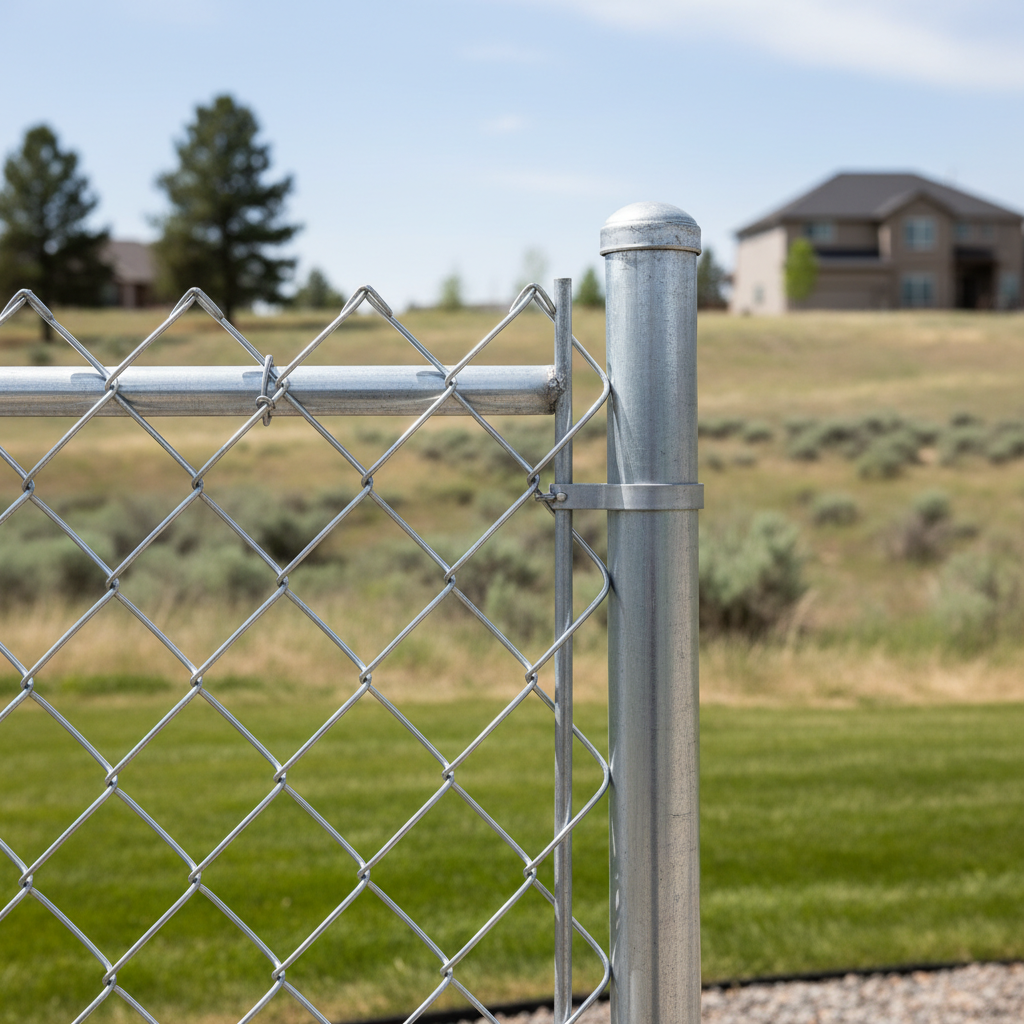
Alright, let's talk chain link fences. I know, I know, some folks think they're just for dog runs or industrial sites. But honestly, for a lot of Boise homeowners, a chain link fence is a smart, practical choice. It's durable, secure, and doesn't break the bank. Over the years, working all over the Treasure Valley, I've heard the same questions pop up again and again. So, I figured I'd lay it all out for you, straight from a local contractor.
Is chain link really secure enough for my yard?
Absolutely. When installed right, a chain link fence is incredibly secure. We're not talking about some flimsy chicken wire here. Modern chain link comes in various gauges (that's the thickness of the wire), and with proper posts set deep in concrete, it's tough to get through. For keeping pets in, kids safe, or just defining your property line, it does the job. If you're worried about someone climbing over, you can even add barbed wire or privacy slats, but for most residential uses, a standard height is plenty secure. It's a visual deterrent, and it's physically robust.
How long does a chain link fence actually last in Boise's weather?
This is where chain link really shines. It's built to last. The galvanized coating on the steel wire protects it from rust, even with our hot, dry summers and occasionally snowy winters. I've seen chain link fences in older Boise neighborhoods, like the North End, that are 30, 40, even 50 years old and still doing their job. Sure, the occasional post might need re-setting if the ground shifts a lot, or a section might get bent, but the material itself holds up incredibly well. You're looking at decades of service with minimal maintenance. Compare that to wood, which needs regular staining or painting, and you start to see the value.
What's the deal with privacy? Can I get a chain link fence that isn't see-through?
You bet. While the classic chain link is transparent, there are great options for privacy. The most common solution is privacy slats. These are strips of plastic or aluminum that weave directly into the mesh. They come in different colors – green, black, brown, beige – and can block anywhere from 75% to 98% of visibility. They're pretty easy to install, either by us or even as a DIY project later on. Another option, though less common for residential, is using windscreen fabric. It's often seen on sports fields, but some homeowners use it for a temporary or more industrial look. For a permanent solution with good aesthetics, privacy slats are the way to go. They're durable and stand up to our winds pretty well.
Will a chain link fence look cheap or industrial in my residential neighborhood?
This is a common concern, and I get it. The old silver chain link definitely has that industrial vibe. But things have changed. You can now get vinyl-coated chain link in colors like black, green, or brown. These colored coatings blend much better with landscaping and homes. A black chain link fence, for example, almost disappears against a green lawn or trees, especially from a distance. It offers security without being an eyesore. We've installed plenty of these in newer developments around Meridian and Eagle, and they look sharp. It's a clean, understated look that provides function without dominating your yard's aesthetic.
What's involved in the installation process? How long does it take?
The process is pretty straightforward, but it requires precision. First, we'll mark out the fence line and dig the post holes. For a solid fence that won't lean, those posts need to be set deep – usually 24-30 inches – and firmly in concrete. This is especially important in Boise where we can have some pretty rocky soil depending on the area. Once the concrete cures (which takes a day or two), we attach the top rail, tension bands, and then unroll and stretch the chain link mesh. Stretching is key; it needs to be taut so it doesn't sag. For an average residential yard, say 150-200 linear feet, we can usually get the posts set in one day, and then the fence itself installed in another day or two after the concrete cures. So, from start to finish, you're usually looking at 3-5 days, depending on the size and complexity of the job, and how many gates you need.
Do I need a permit for a chain link fence in Boise?
Good question, and one I get a lot. For most residential fences in Boise, if they're under 6 feet tall, you generally don't need a building permit from the city. However, there are always exceptions, especially if you're in a historic district or if your property has specific covenants. It's always a good idea to check with the City of Boise Planning and Zoning Department or your HOA if you have one, just to be sure. Oasis Fencing Co. can help you figure out what's needed for your specific project, but ultimately, that responsibility falls on the homeowner. We always recommend getting clear on this before we start digging.
So, there you have it. Chain link fences are a solid, low-maintenance, and cost-effective choice for many Boise homeowners. Don't let old perceptions fool you; they've come a long way. If you've got more questions or want to talk about getting one installed, just give us a call. We're here to help.