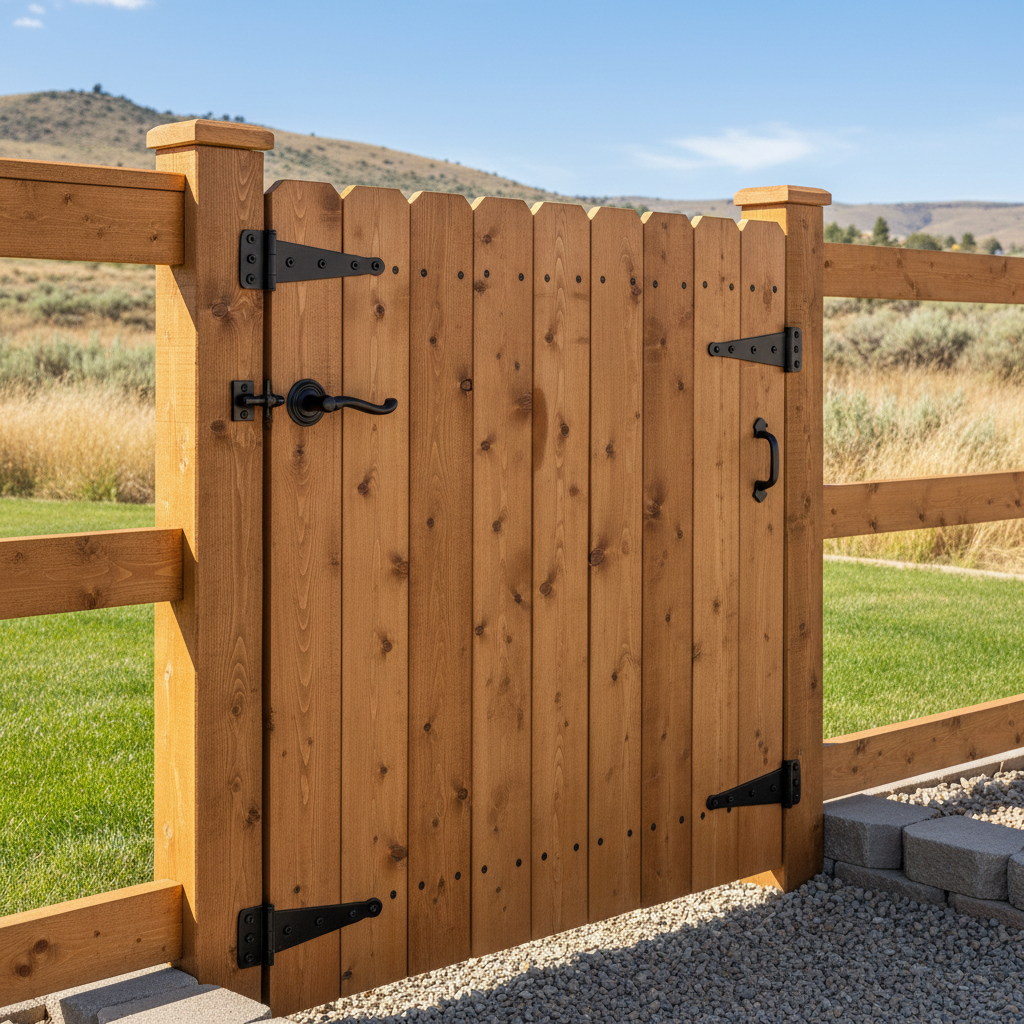
What's the best type of gate for my property?
That's the million-dollar question, isn't it? And honestly, there's no single "best" type. It all boils down to what you need it for, the look you're going for, and, of course, your budget. Are you trying to keep the dog in, or are you securing a commercial property? Do you want something grand and impressive, or just a simple, functional access point?
For homes, you've got a few main players. Wood gates are classic; they offer privacy and a natural look, and you can match them to a wood fence pretty easily. But they do need more maintenance, especially with our dry Boise summers and wet winters. Iron gates, whether ornamental or simpler designs, are super durable and offer great security, plus they look sharp. They don't give you much privacy, though. Chain-link gates are the most economical and practical for utility, but let's be real, they aren't winning any beauty contests. Then there are composite gates, which give you the look of wood with less upkeep. We also do a lot of custom gates, like steel frames with wood infill; that gives you the best of both worlds: strength and aesthetics.
Think about your fence first. You usually want the gate to complement or match the existing fence. If you're starting from scratch, consider the overall style of your home and landscaping. And don't forget about the function – a pedestrian gate is totally different from a double-swing driveway gate.
How do I know if I need a swing gate or a slide gate?
This is a big one, and it mostly comes down to space. A swing gate, which is probably what you picture first, opens like a door. It needs a clear, unobstructed arc to swing inward or outward. If you have a long driveway with plenty of room before it hits your garage or the street, a swing gate is often the most straightforward and cost-effective option. They can be single or double-leaf, depending on the width of your opening.
A slide gate, on the other hand, moves horizontally along the fence line. It's perfect if you have a short driveway, a steep incline, or if there's simply no room for a swing gate to open. Think about properties in the North End with smaller front yards – a slide gate often makes more sense there. They do require a longer fence line on one side for the gate to retract into, usually about 1.5 times the width of the opening. They're generally more complex to install, especially if you're automating them, which means a higher upfront cost. But for certain situations, they're the only practical solution.
What kind of hardware is best for my gate?
Hardware is often overlooked, but it's critical. You can have the best gate in the world, but if the hinges sag or the latch sticks, you're going to be frustrated. For most residential gates, we're talking about hinges, a latch, and maybe a drop rod for double gates.
- Hinges: Heavy-duty hinges are a must. Seriously, don't skimp here. For wood gates, often a strap hinge or a T-hinge works well. For heavier gates, like iron or large wood gates, you'll want something even more robust, like a J-bolt hinge or a weld-on barrel hinge for metal frames. Self-closing hinges are great for pool gates or if you just want to know the gate won't be left open.
- Latches: Again, durability is key. A simple gravity latch works for many pedestrian gates. For more security, a padlockable latch or a keyed entry latch is a good idea. For driveway gates, especially automated ones, you'll have a different locking mechanism built into the opener.
- Drop Rods: If you have a double gate, a drop rod (sometimes called a cane bolt) secures one side of the gate to the ground, allowing the other side to latch to it. Make sure it's long enough and strong enough to handle regular use.
Always go for galvanized or stainless steel hardware to prevent rust, especially with our changing seasons here in Boise. It'll last longer and look better.
Do I need a permit for gate installation in Boise?
This is a common question, and the answer can be a bit nuanced. For most standard residential pedestrian gates or even simple driveway gates that are part of an existing fence, you often don't need a separate permit from the City of Boise. However, if your gate is part of a new fence installation that requires a permit (for example, if it's over a certain height or in a specific zoning district), then the gate would be included in that. The big exception is automated gates, especially driveway gates. These often have electrical components, and sometimes require specific setbacks or safety features that might trigger a permit requirement or at least an electrical inspection. It's always best to check with the City of Boise Planning & Development Services or have your contractor do it. At Oasis Fencing Co, we always confirm permit requirements for our clients before we start any work, just to be safe.
How much maintenance do gates require?
Maintenance varies a lot by material and type. A well-built gate from Oasis Fencing Co will last, but nothing is truly maintenance-free.
- Wood Gates: These need the most attention. You'll want to inspect them annually for rot, warping, or insect damage. Staining or sealing every 2-3 years is crucial to protect them from the elements. Keep an eye on the hinges; they can sag over time, especially with heavy wood.
- Iron Gates: Pretty low maintenance. Check for rust spots, especially around welds, and touch them up with appropriate paint. Lubricate hinges annually.
- Chain-Link Gates: Almost zero maintenance. Just make sure the hinges and latches are working freely.
- Automated Gates: These require a bit more. The opener mechanism needs regular checks. Lubricate moving parts, ensure safety sensors are clear and working, and check for any loose wiring. I recommend having a professional service them every year or two to keep them running smoothly.
Regardless of the material, keep the area around the gate clear of debris, and make sure the gate isn't dragging on the ground. Small adjustments early on can prevent bigger problems down the road.
Can I automate any gate?
Not necessarily, but most types of gates *can* be automated with the right setup. The main considerations are the gate's weight, its structural integrity, and the type of opening mechanism (swing or slide). You can't just slap an opener on a flimsy gate; it needs to be built to withstand the forces of automation. For example, a heavy wooden gate might need a stronger motor and more robust hinges than a lighter aluminum gate.
Swing gates use arm operators or underground operators. Slide gates use a motor that drives a chain or rack along the gate. The key is matching the opener to the gate's specifications. Also, you need power near the gate, which might mean trenching for electrical lines. Safety features like photo-eye sensors (to detect obstructions) are non-negotiable and often legally required. If you're thinking about automation, it's best to discuss it during the initial gate design phase. It's much easier and usually more cost-effective to build an 'automation-ready' gate from the start than to try and retrofit an old, rickety one.
What about security features for gates?
Security is a big concern for a lot of folks, and gates are a first line of defense. Beyond just the physical strength of the gate itself, there are several features you can add.
- Locks: Simple padlockable latches are good for pedestrian gates. For more robust security, keyed entry locks, deadbolts, or even electronic keypads can be integrated.
- Automation & Access Control: This is where things get serious. Automated driveway gates can be controlled by remote, keypad, intercom system, or even your smartphone. These systems often include magnetic locks or electric strikes that engage automatically when the gate closes.
- Intercoms/Video: For driveway gates, an intercom system lets you speak with visitors before granting access. Video intercoms take it a step further, letting you see who's at your gate.
- Anti-Climb Features: For higher security, things like pointed finials on iron gates or even razor wire (though less common residentially) can deter climbers.
- Lighting: Good lighting around your gate isn't just for aesthetics; it's a security feature. A well-lit gate is less appealing to trespassers.
When we talk about security, it's not just about keeping people out. For many Boise families, it's about keeping pets and kids safely in their yard. So, make sure your gate closes securely and doesn't have gaps a small child or dog could slip through.