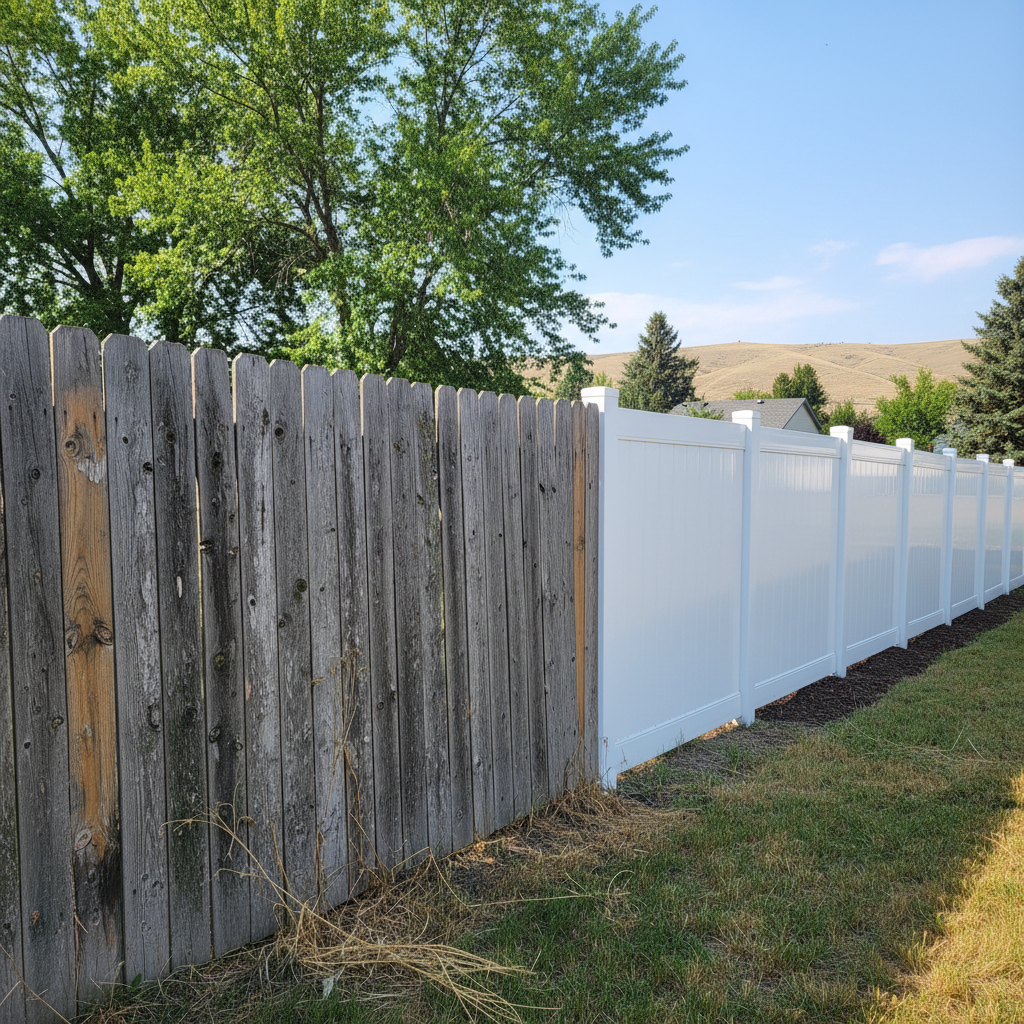
Alright, let's talk fences. Specifically, vinyl fences, because they're a popular choice around Boise for good reason – low maintenance, good looks, and they hold up well. But here's the thing: once you've picked out your style and color, you still have a big decision to make about how those posts get anchored. And believe me, how those posts go in the ground is probably the most important part of the whole job. It really is the foundation.
You've got two main ways to go when it comes to setting fence posts with concrete: the 'wet set' method or the 'dry set' (sometimes called dry packing). Both involve concrete, but the process and the end result can be pretty different, especially with our unique Boise soil and weather. Let's look at what each means for your wallet, how long your fence will last, what you'll need to do to keep it looking good, and how it'll stand up over time.
Wet Set Concrete: The Solid Choice for Stability
When we talk about 'wet setting,' we mean mixing the concrete with water *before* it goes into the post hole. You get that nice, consistent, pourable mix, then you set your post in it, make sure it's plumb (that's construction talk for perfectly straight up and down, which is key), and let it cure. This is the traditional method, and for good reason.
Cost
Upfront, wet setting might seem a little more expensive. You might need to rent a mixer, or at least spend more time and effort mixing bags by hand. If you're hiring a pro like Oasis Fencing Co., this is usually our standard practice, and it's factored into the quote. It's an investment in the long haul, honestly. While dry-pour concrete can be a usable option for setting fence posts, it's generally not ideal for projects needing significant strength and durability.
Durability
This is where wet set really shines. When concrete is properly mixed and poured wet, it creates a much stronger, more uniform bond around the post. Every part of the concrete gets the right amount of water, which helps it cure correctly and bind together. This means fewer air pockets and weak spots. In Boise, with our clay-heavy soils north of the river and the freeze-thaw cycles we get every winter, that strong, solid footing is absolutely key. Clay soil holds moisture, amplifying those freeze-thaw forces that can push and pull at your posts. A wet-set post resists that movement far better, preventing leaning and shifting down the line. Idaho fence posts should be set 30-36 inches deep, with 100-150 lbs of wet-set concrete in 10-12 inch diameter holes to combat these forces. Why does that matter? Because a sturdy fence is a happy fence.
Maintenance
Once it's in, it's pretty much set and forget. A well-installed wet-set post means less worry about your fence becoming wobbly or needing adjustments. You'll still want to keep an eye on things, like making sure water drains away from the base, but the post itself will be solid.
Appearance
Because you can adjust the post precisely when the concrete is wet, it's easier to get a perfectly straight and level fence line. This leads to a cleaner, more professional-looking installation right from the start. That's a big plus for curb appeal.
Dry Set Concrete: The Quicker, But Riskier, Approach
Dry setting involves pouring the dry concrete mix into the post hole around the post, then adding water on top to let it seep down and activate the concrete. Sometimes folks just rely on groundwater or rain to do the job. It sounds simple, right?
Cost
On the surface, dry setting can seem cheaper and faster. No mixer needed, less mess perhaps, and you can often set posts and hang panels the same day if you're in a hurry. If you're doing it yourself, you might save on equipment rental or labor time. But is it really saving you money in the long run?
Durability
Here's the rub. While some argue that dry-set concrete can achieve comparable strength if done perfectly, it's a big 'if'. The problem is getting the water to distribute evenly throughout the dry mix. You often end up with inconsistent curing, leading to weaker spots or pockets of uncured concrete. This reduced strength means less resistance to those Boise winds and the soil movement from our freeze-thaw cycles. A fence post with a compromised footing is much more susceptible to shifting or tilting over time. For something like a vinyl fence, which is designed to last decades, you really don't want a weak link right at the foundation. That's just asking for trouble.
Maintenance
You might find yourself dealing with leaning posts or sections sooner than you'd like if the dry set wasn't perfect. This means more time and potential cost for repairs down the road, which honestly negates any initial savings. Nobody wants to fix a fence a few years after it's installed.
Appearance
Adjusting posts once the dry mix is in the hole and water has been added can be really tough. If you don't get it perfectly plumb before the concrete starts to set, you're stuck with it. This can lead to a fence line that isn't as straight or uniform, which definitely impacts curb appeal. And that's not a small thing for your home.
My Recommendation for Boise Homeowners
For vinyl fences in Boise, I'm always going to lean towards the wet set method. Our local conditions—the expansive clay soils, the winter freeze-thaw cycles that can really heave posts, and those strong spring winds—demand the strongest possible foundation for your fence. A vinyl fence is a significant investment, and you want it to stand straight and solid for decades.
While dry setting might offer a quick fix, it's a gamble with long-term stability and durability. You're putting a long-lasting material like vinyl on a potentially weaker foundation. That just doesn't make sense to me, generally speaking.
When Oasis Fencing Co. installs your vinyl fence, we use the wet set method because we know it's the best way to make sure your fence will withstand everything the Treasure Valley weather throws at it. It's about building it right the first time so you don't have to worry about it later. You want a fence that looks great and stays great, and that starts with a solid foundation.