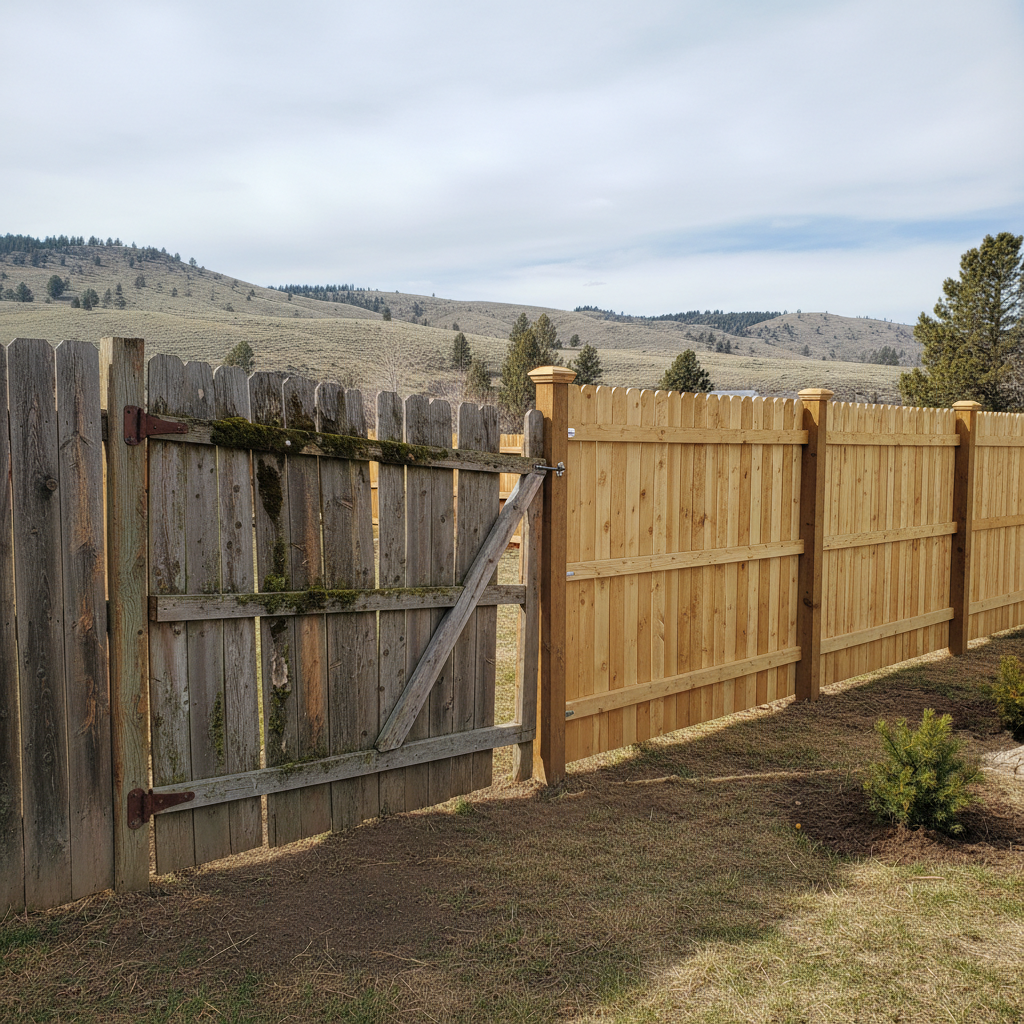
You're ready for a new wood fence, maybe to spruce up the backyard or add some privacy. Great choice. Wood fences look fantastic and they're a classic for a reason. But before you get too far, we need to talk about how those posts are going into the ground. This isn't just a small detail; it's probably the most critical decision for how long your fence will actually last. We're talking about concrete versus a gravel backfill, and for Boise homeowners, there's a clear winner.
The Case for Concrete Post Footings
This is the traditional method, and for good reason. When I'm building a fence that I want to stand strong for decades, especially here in Boise, concrete is my go-to. Here's why:
- Unmatched Stability: A concrete footing creates a solid, heavy base that locks your post in place. Think about our windstorms here in the Treasure Valley – those big gusts coming off the foothills can really put a fence to the test. Concrete footings resist leaning and shifting better than anything else.
- Moisture Protection (Counter-Intuitive, I know): Some folks worry concrete traps moisture, leading to rot. And yes, if done wrong, it can. But when done right, with proper drainage at the bottom and a crown around the top, concrete actually protects the post. It keeps the post from sitting directly in saturated soil, and it prevents water from pooling around the wood at the critical ground line. We always make sure to slope the concrete away from the post at the surface, creating a little dome that sheds water.
- Pest Resistance: Termites and other wood-boring insects are less likely to get a foothold in a concrete-encased post compared to one directly in the soil. It creates a barrier.
- Durability in Clay Soil: Boise's soil can be pretty heavy clay in a lot of areas, especially if you're out towards Meridian or Kuna. This soil expands and contracts with moisture, which can put a lot of stress on fence posts. Concrete footings help mitigate this movement, providing a more stable anchor.
The Case for Gravel Backfill (or 'Dry Set')
Okay, so concrete sounds great, right? But there's another method: setting posts with gravel. Sometimes it's called 'dry setting' or just gravel backfill. It has its proponents, and in certain situations, it can work. Here's what you need to know:
- Better Drainage (Potentially): The main argument for gravel is drainage. The idea is that water drains freely through the gravel, preventing the post from sitting in standing water. This is true, IF the gravel is deep enough and IF you have good drainage elsewhere.
- Easier to Replace: If a post eventually rots or breaks, it's generally easier to dig out a gravel-set post than a concrete-set one. You just scoop out the gravel.
- Cost: Gravel is often cheaper than concrete, which can be a factor if you're on a very tight budget.
Why I Recommend Concrete for Boise Fences
Look, I've built a lot of fences around here, from the North End to the Bench. And while gravel has its place, especially in very sandy, fast-draining soils (which we don't always have here), I almost always steer my clients towards concrete for wood fence posts. Here’s why:
- Our Clay Soil: As I mentioned, Boise has a lot of clay. Gravel alone just doesn't offer the same stability against the expansion and contraction of our local soil. A concrete footing acts like a solid anchor, resisting the heaving and settling that can shift gravel-set posts over time.
- Wind Load: We get some serious wind. A well-built fence with concrete footings can stand up to those gusts much better. You don't want your fence leaning after the first big storm.
- Longevity: When Oasis Fencing Co. builds a fence, we want it to last. A properly installed concrete footing, with good drainage techniques, will give you the longest lifespan for your wood posts. It's an investment in durability.
- Proper Installation is Key: The